3. Cap Tastes Nutty or Sweet
Showing all 10 results
-
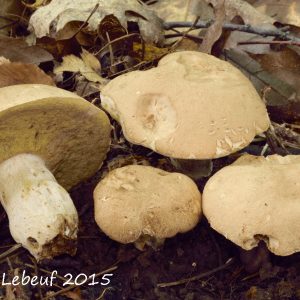
Boletus atkinsonii (“Atkinson’s Bolete”)
Grayish- to yellow-brown cap may crack w/age esp. by the edge. Buff stem w/fine brownish netting. White cap flesh DNS, & may taste nutty-sweet.
Read more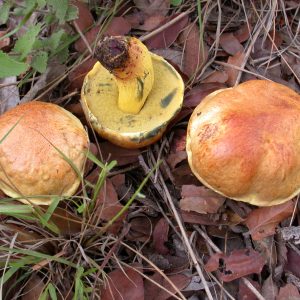
Boletus holoxanthus
Yellow cap, pores & stem flesh all blue quickly & then fade to dark gray. Coarsely red-netted stem & cap flesh also blue & then fade.
Read more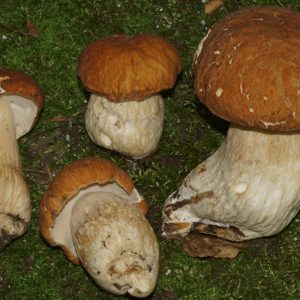
Boletus nobilissimus
Red- to yellow-brown cap pitted, often greatly. White pores age to greenish-yellow. Tastes sweet. Stem very netted, sometimes raised.
Read more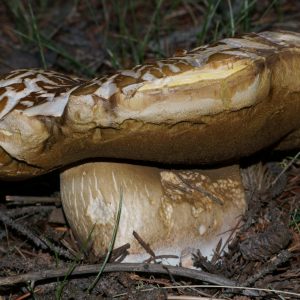
Boletus reticulatus (“Summer King Bolete”)
Brown (yellow-, grayish-, or dark-) cap fissures & cracks in age. Grayish-brown stem has netting that starts white but darkens.
Read more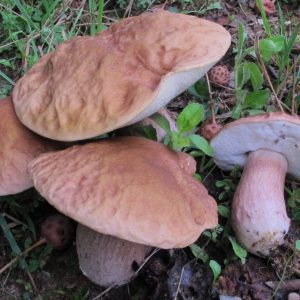
Boletus separans (“Lilac Bolete”)
Variable cap (buff to purplish-brown) usually has lilac tones & is often wrinkled or pitted. White-netted cap-colored stem.
Read more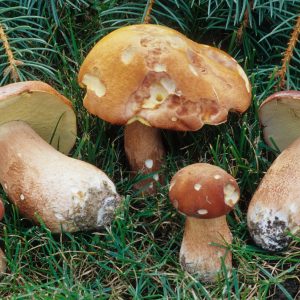
Boletus subcaerulescens (“Almost Bluing King Bolete”)
Stem has white netting high, darkening lower down & from handling. Reddish-brown, oft-wrinkled cap. Creamy pores age to yellow & may stain blue-gray that turns brownish.
Read more
Leccinum barrowsii
Found only in Santa Clara Canyon near Santa Fe, NM. Pale rose pink cap ages to grayish white. Inconspicuous white scabers on stem dry to dark gray. Likes conifers.
Read more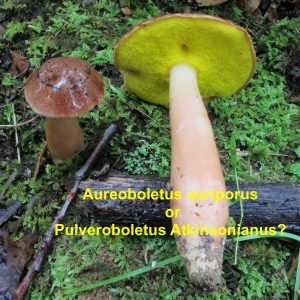
Pulveroboletus atkinsonianus
Red to cinnamon, oft-viscid cap ages darker brown & has a sterile edge. Oft-viscid, oft-ridged stem enlarges going down, bends before snapping (think asparagus), & is cap colored low & lighter high.