




Description
Genus: Neoporphyrellus
- Genus 2: Tylopilus
Species: alboater
Common Name: “Black Velvet Bolete”
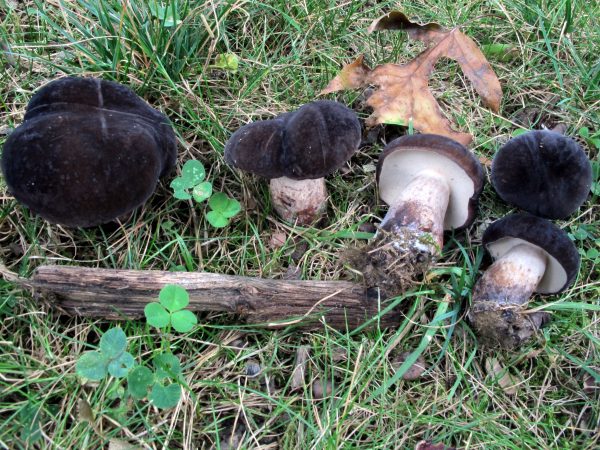
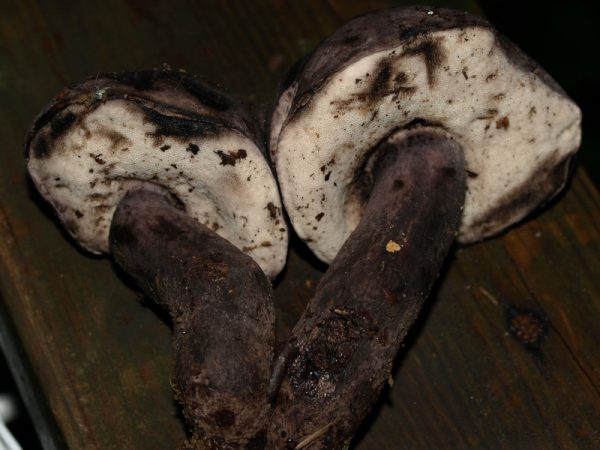
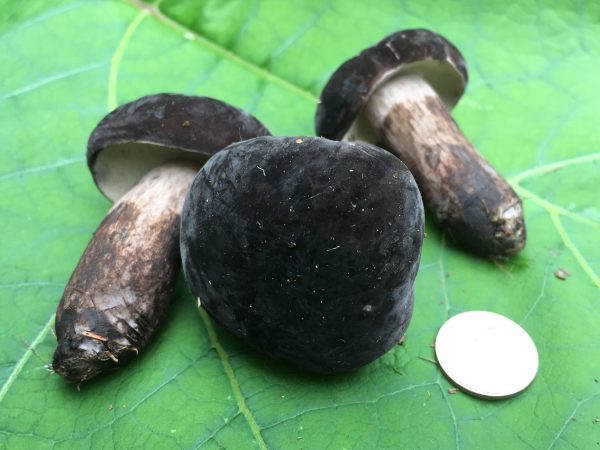
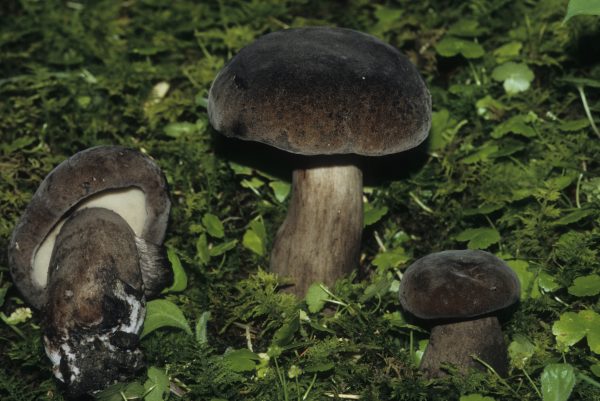
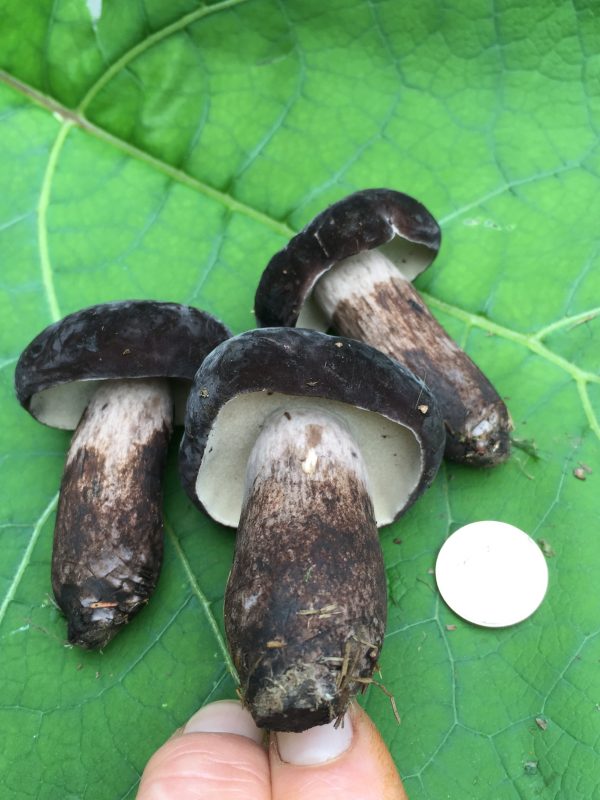
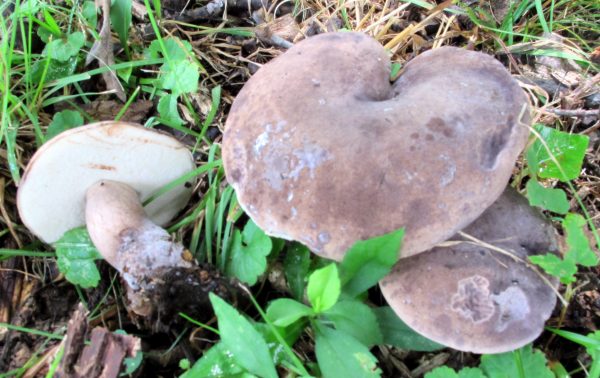
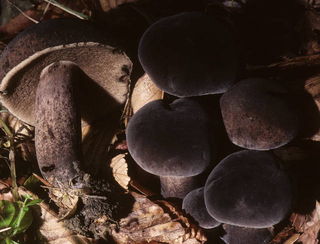
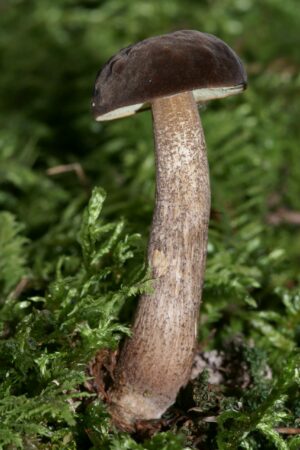
Tells: Velvety black cap. Oft-swollen or bulbous stem echoes the cap color. Pores & white cap flesh usually stain pink, then become dark.
Other Information: The cap may have a whitish or purplish bloom when very young, & can crack in age. Pores start out bright white & slowly age toward pinkish. Both the pores and cap flesh usually stain pink before turning dark, but the staining doesn’t always happen in extreme youth or age. Likes oak.
Science Notes: This well known and delicious species was moved out of Tylopilus in late 2025, and transferred to the new genus Neoboletus (which also has pink spores).
Edibility: Choice.
CHEMICAL TESTS:
- NH4OH (Ammonia): Cap skin does not react. Cap flesh turns olive before shifting to brownish orange.
- KOH: Cap skin turns amber-orange. Cap flesh turns pinkish orange.
- FeSO4 (Iron Salts): Cap skin has no reaction. Cap flesh instantly turns grayish- to greenish- blue.
Links:
 |
590 |  |
337 |  |
256 |  |
366 |
Got something to discuss?